Digital intensives, fabrication and electronics
Information
Footprint
Set-up
Take-down
Movement as a desired property
All matter moves, at every scale, because of chemical and physical reactions. Architecture usually treats this as a constraint to anticipate, so that a building keeps its properties in bad weather and under environmental conditions. In this week-long workshop we took the opposite approach: movement is the property we are looking for. The hypothesis comes from natural systems, which adapt to their environment through automatic responses tied to their development: morphogenesis, reactivity, growth, regeneration. It aims at an alternative economic and energy system, advantageous in fabrication and above all over time.
From a shared prototype to each group’s developments
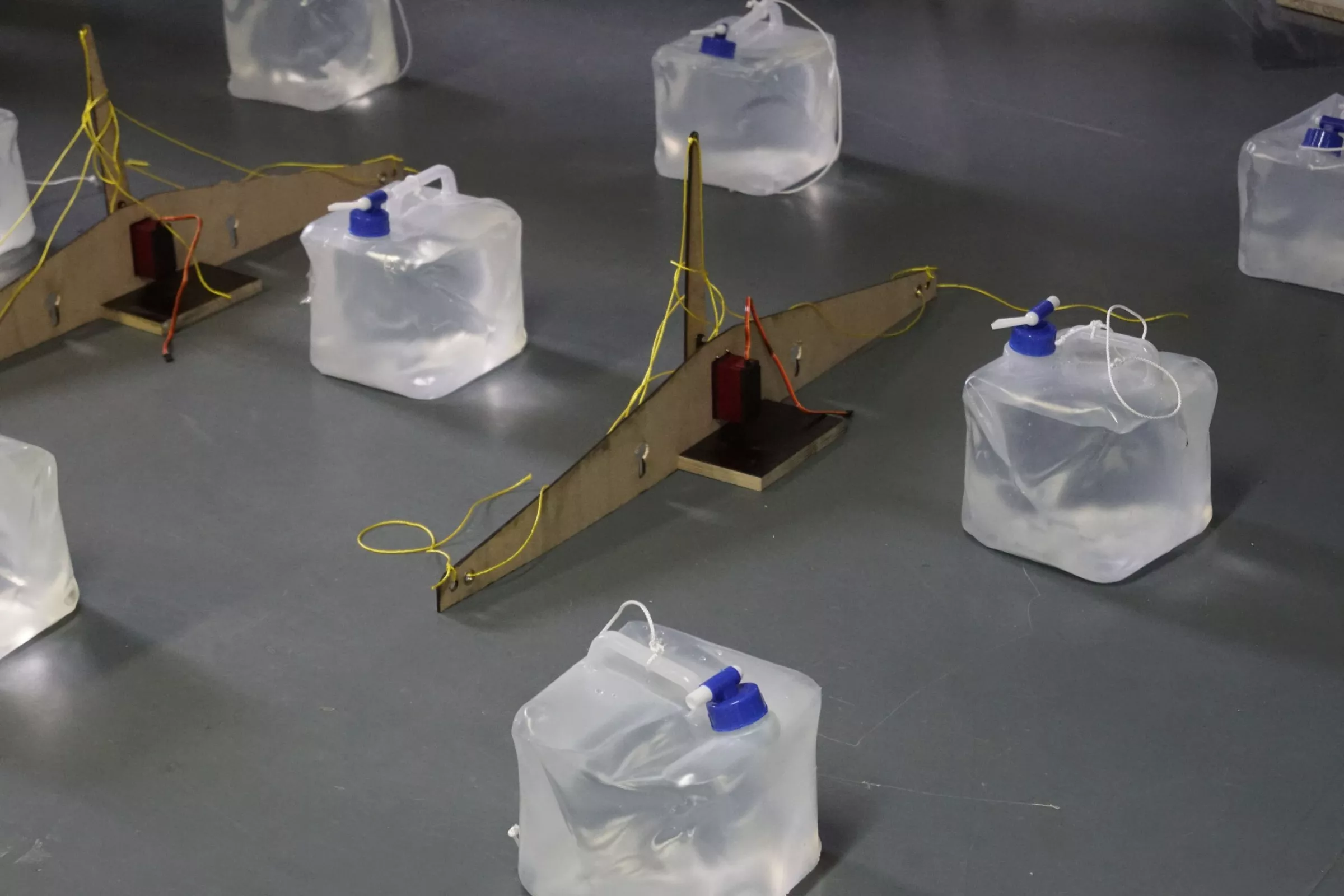
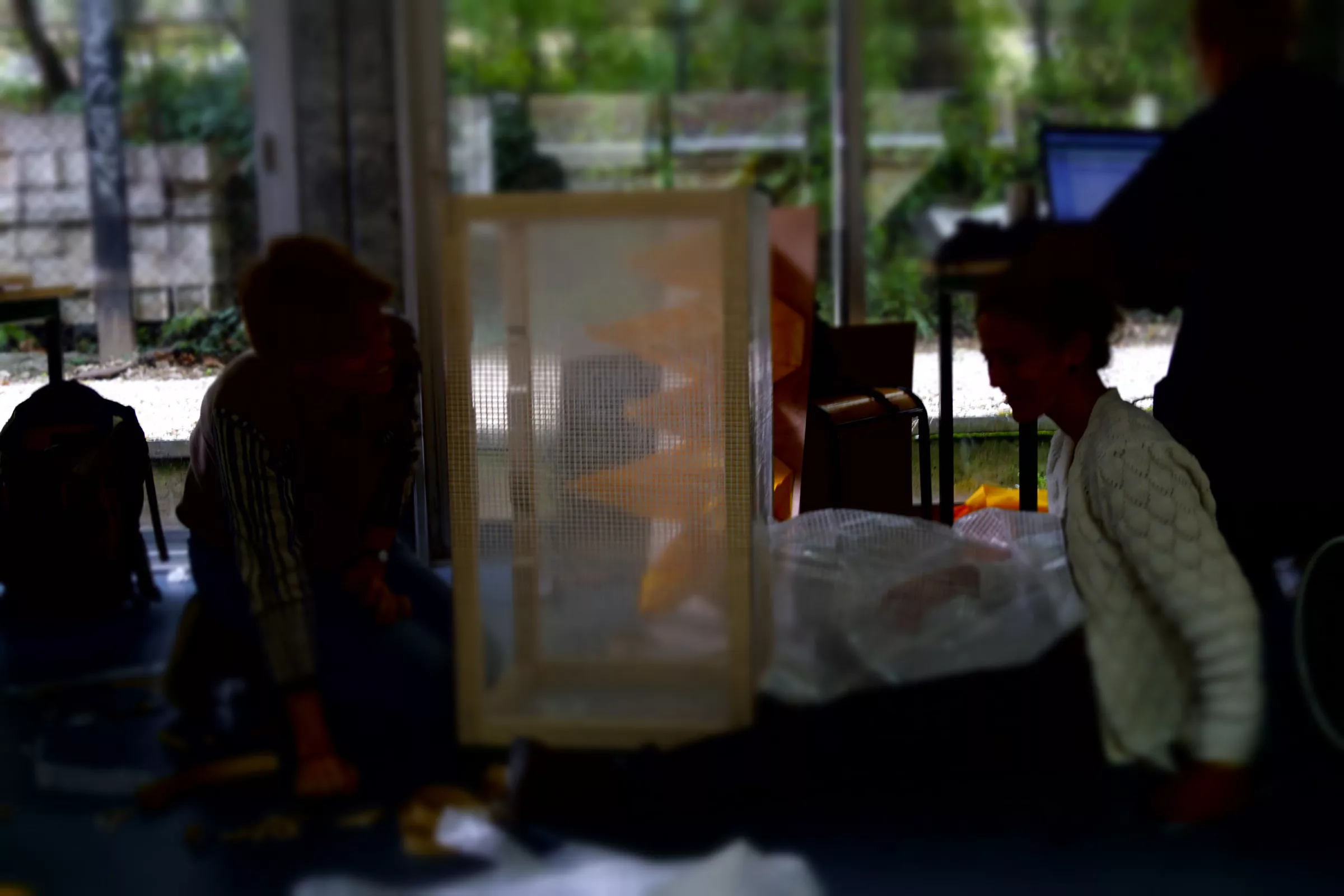
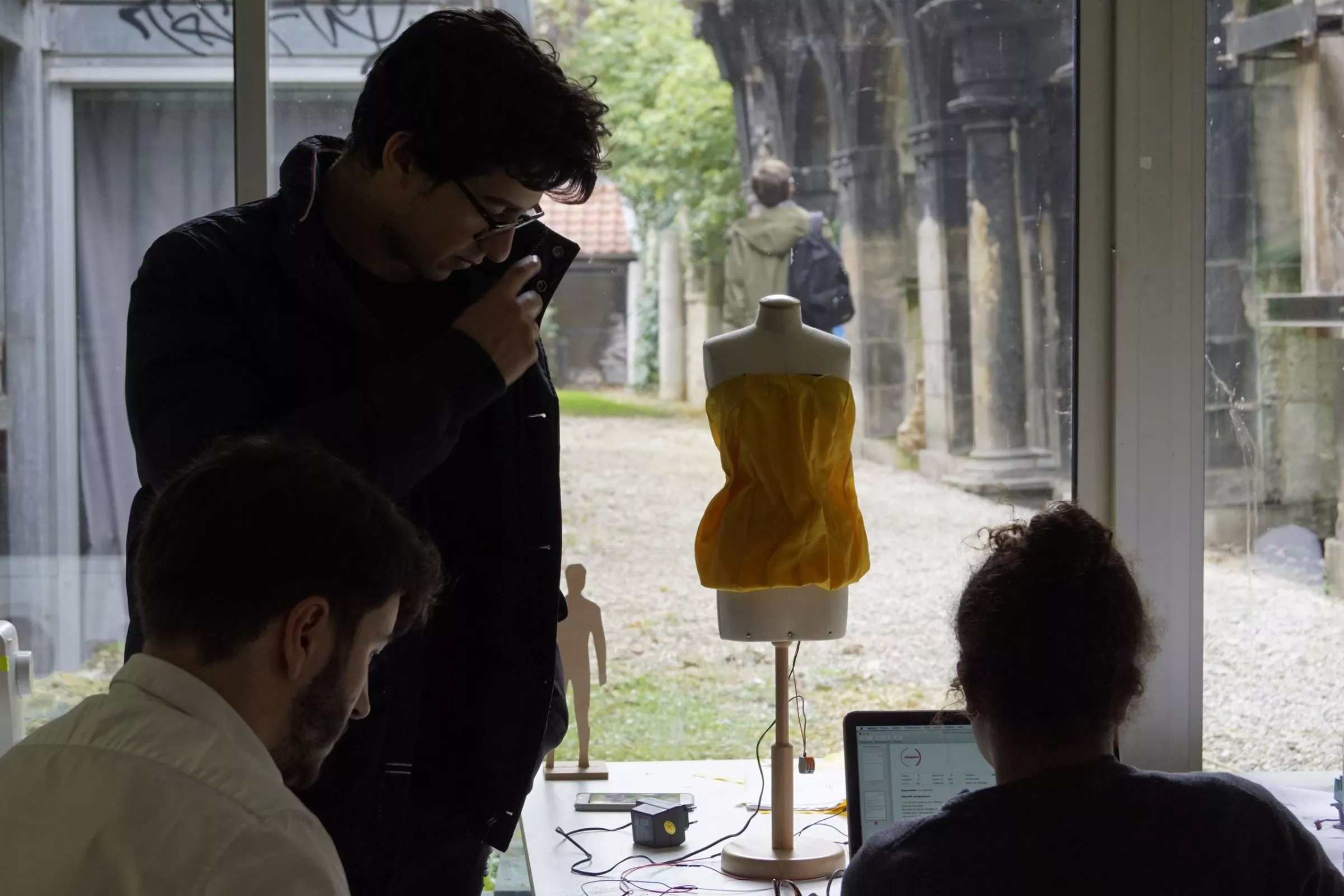
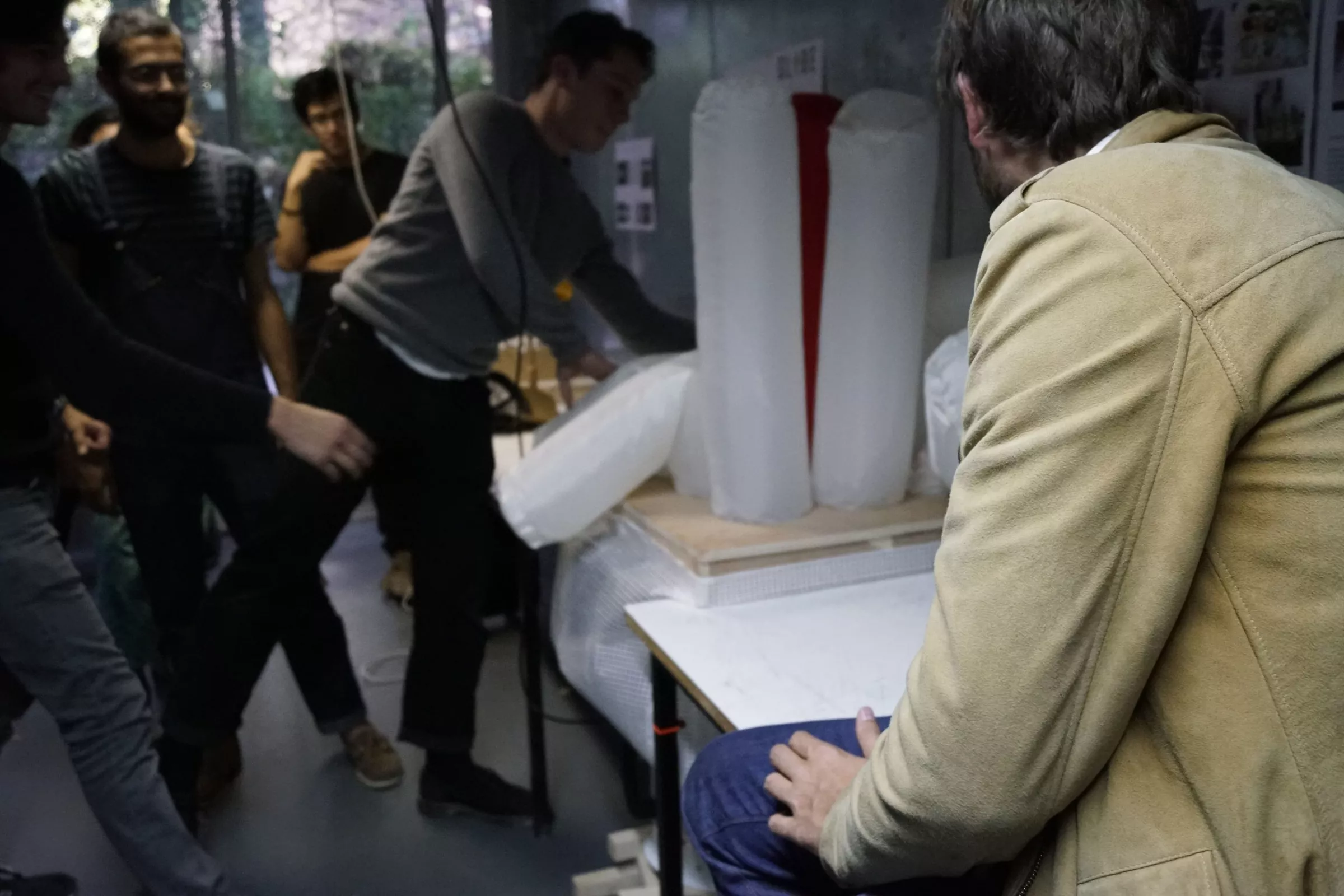
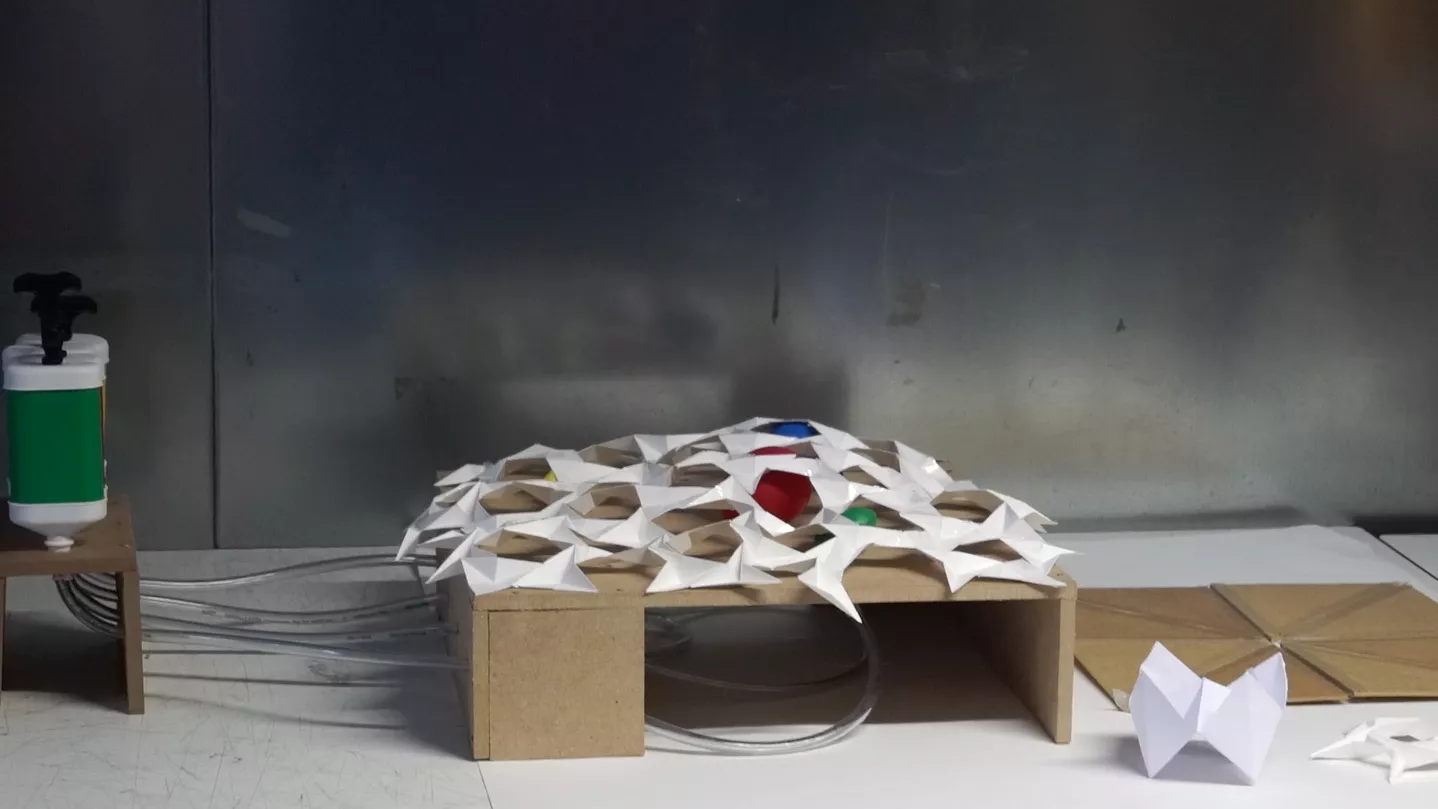
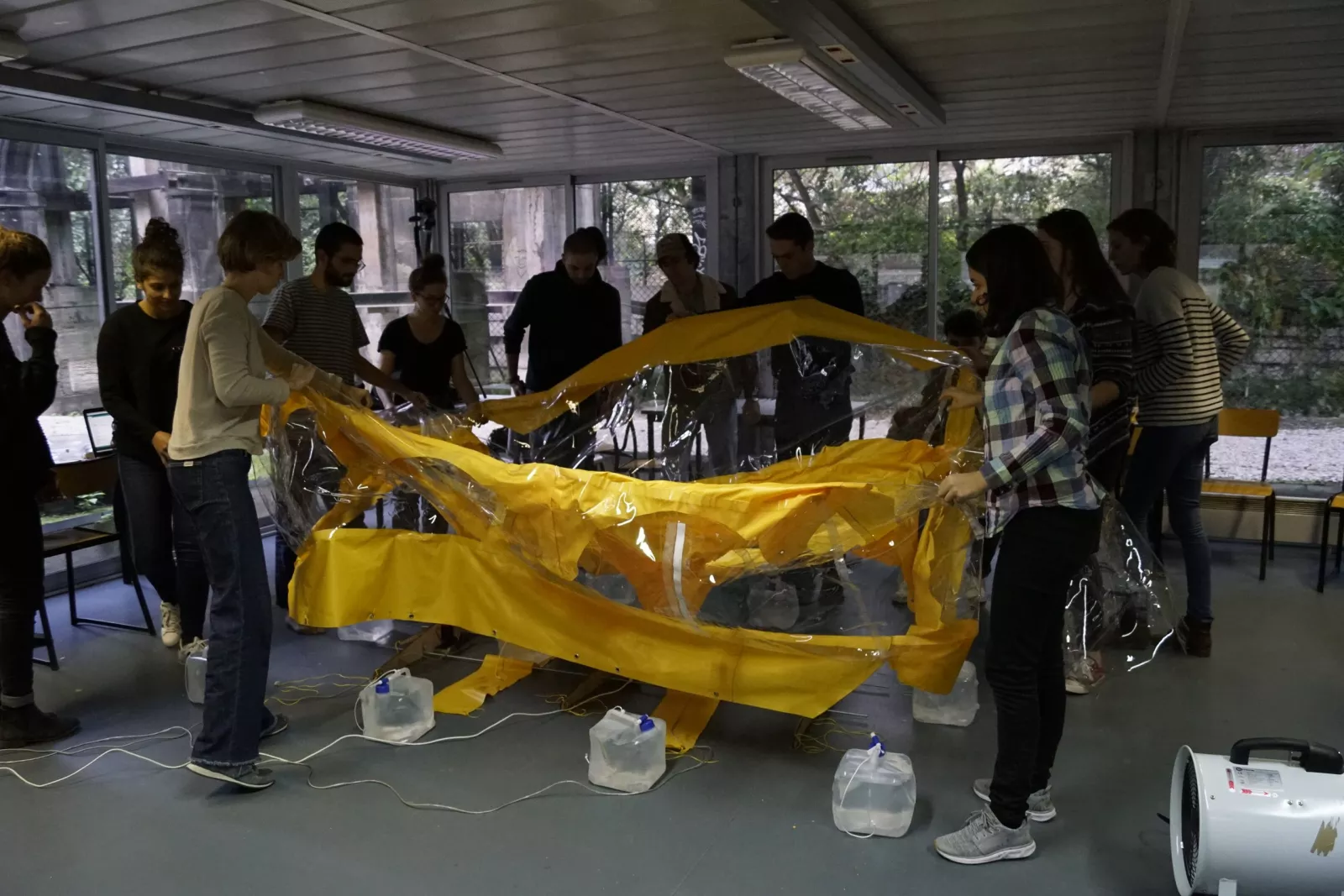
The workshop covered geometry, physical sizing, programming and automation, with one goal: to build a reactive structure whose shape can be changed and controlled. Students learned these topics by making, using the lightness, speed and tolerance of inflatable structures, and by getting used to microcontrollers and mechatronic circuits. After a theoretical and technical presentation, participants were split into six subgroups. Each built one module of a pre-designed prototype, made of an inflated dome and a mechatronic assembly. Together, the six modules formed a first large activated model. In a second phase, each group proposed a development of the structure based on what it had learned by making: a new model, an intervention on the existing model, or a fictional or material proposal.