Reverse pattern-making: algorithms and full-scale fabrication
Information
Footprint
Set-up
Take-down
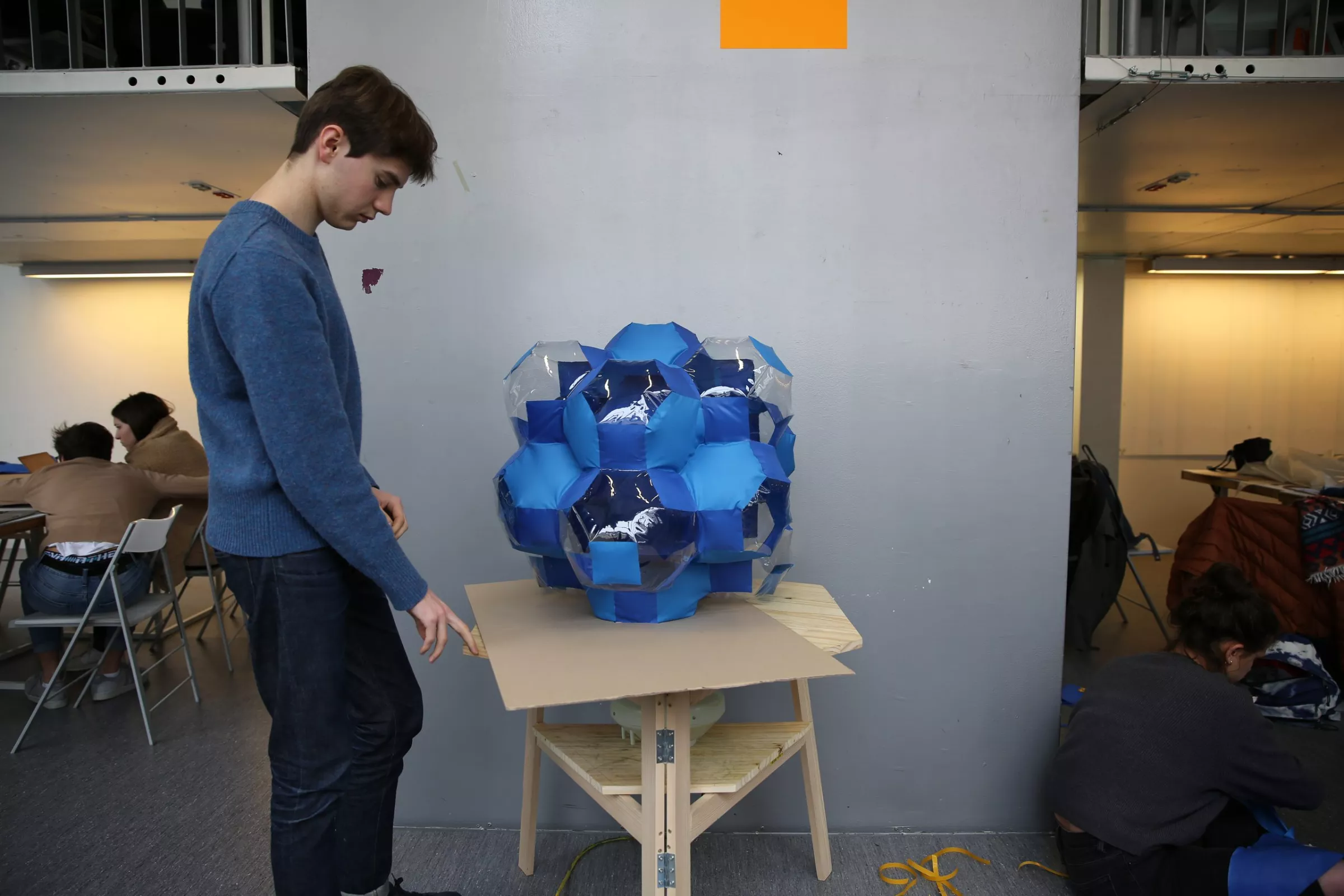
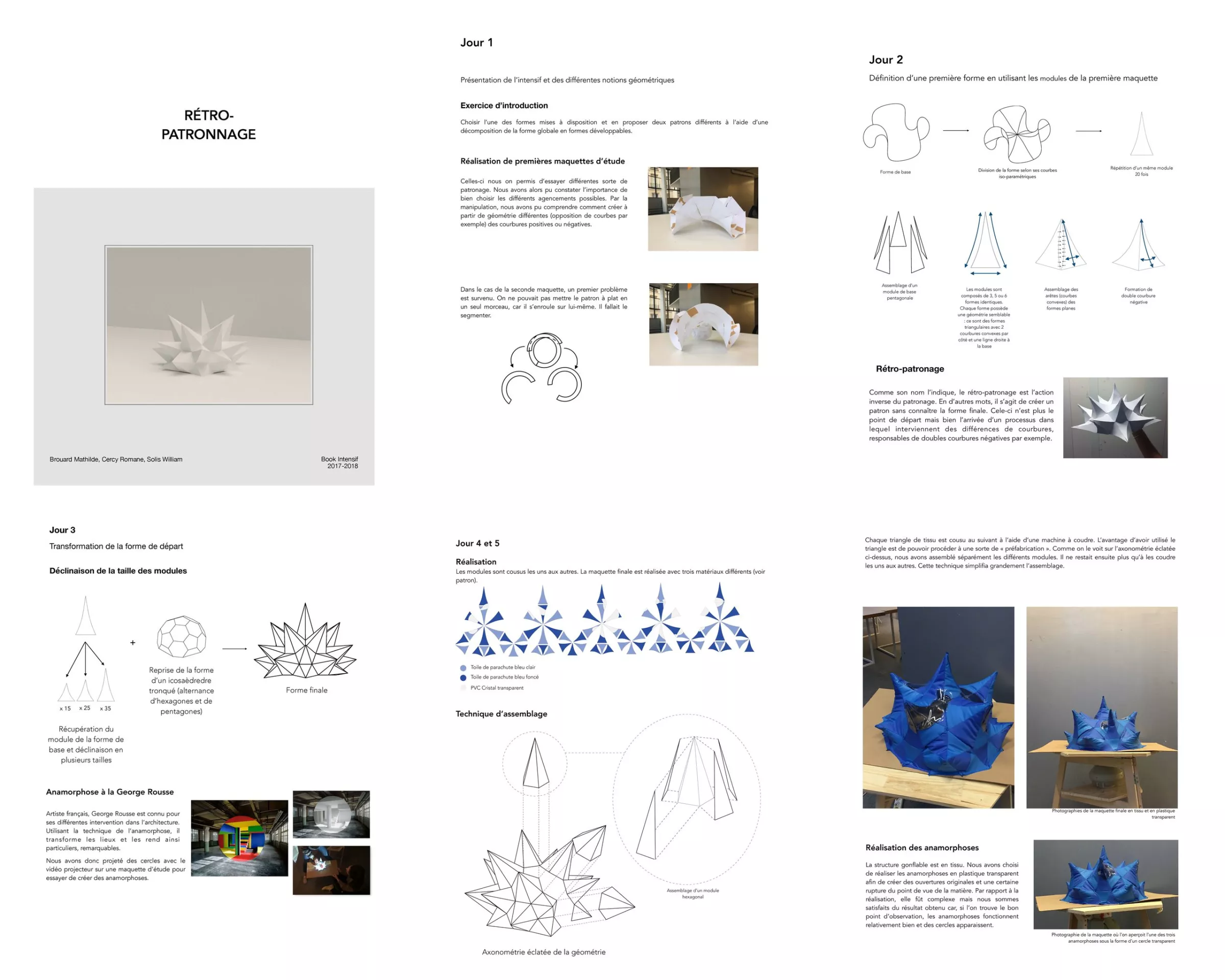
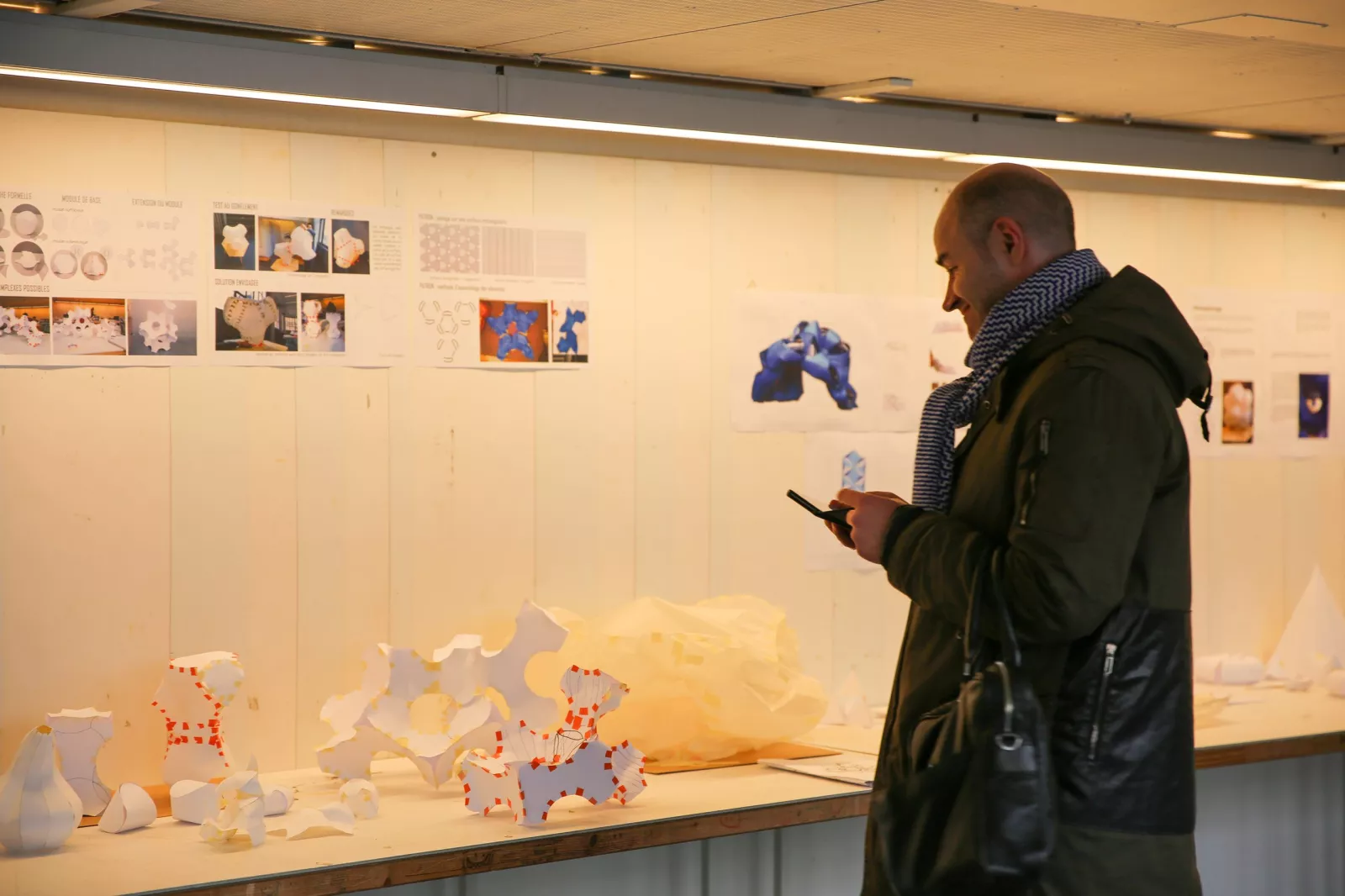
Designing an inflatable structure usually means defining a three-dimensional shape, then cutting it into developable surface patches made from flat fabric. In this one-week workshop, we reversed that order. Students first drew patterns of varied shapes, checking that their edge lengths allowed them to be assembled. Once assembled and inflated, these pieces produced a volume whose overall shape came from a local process, without having been drawn in advance.
An algorithmic method, from digital to model-making
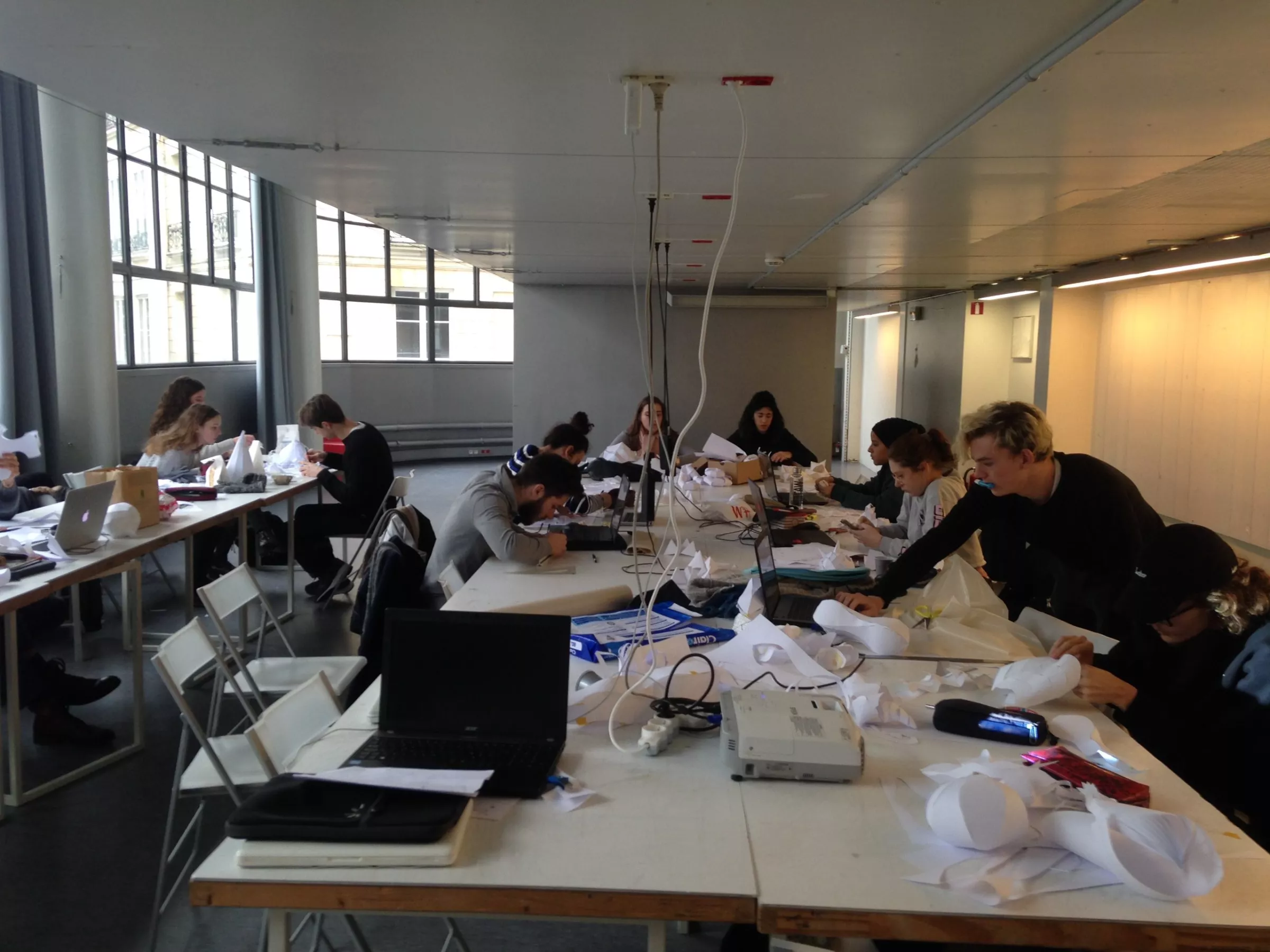
Each group defined its own algorithm: a series of explicit rules leading step by step to the final volume. The shapes were tested with inflation simulations in Rhino, Grasshopper and Kangaroo, then checked on small-scale models cut on a laser cutter. Going back and forth between digital and physical models let students adjust the patterns before scaling up. The method makes it possible to explore complex geometries, far from the spheres and cylinders that built inflatable architecture long stuck to. It also follows the logic of many biological structures governed by surface tension.
From fabrication to presentation
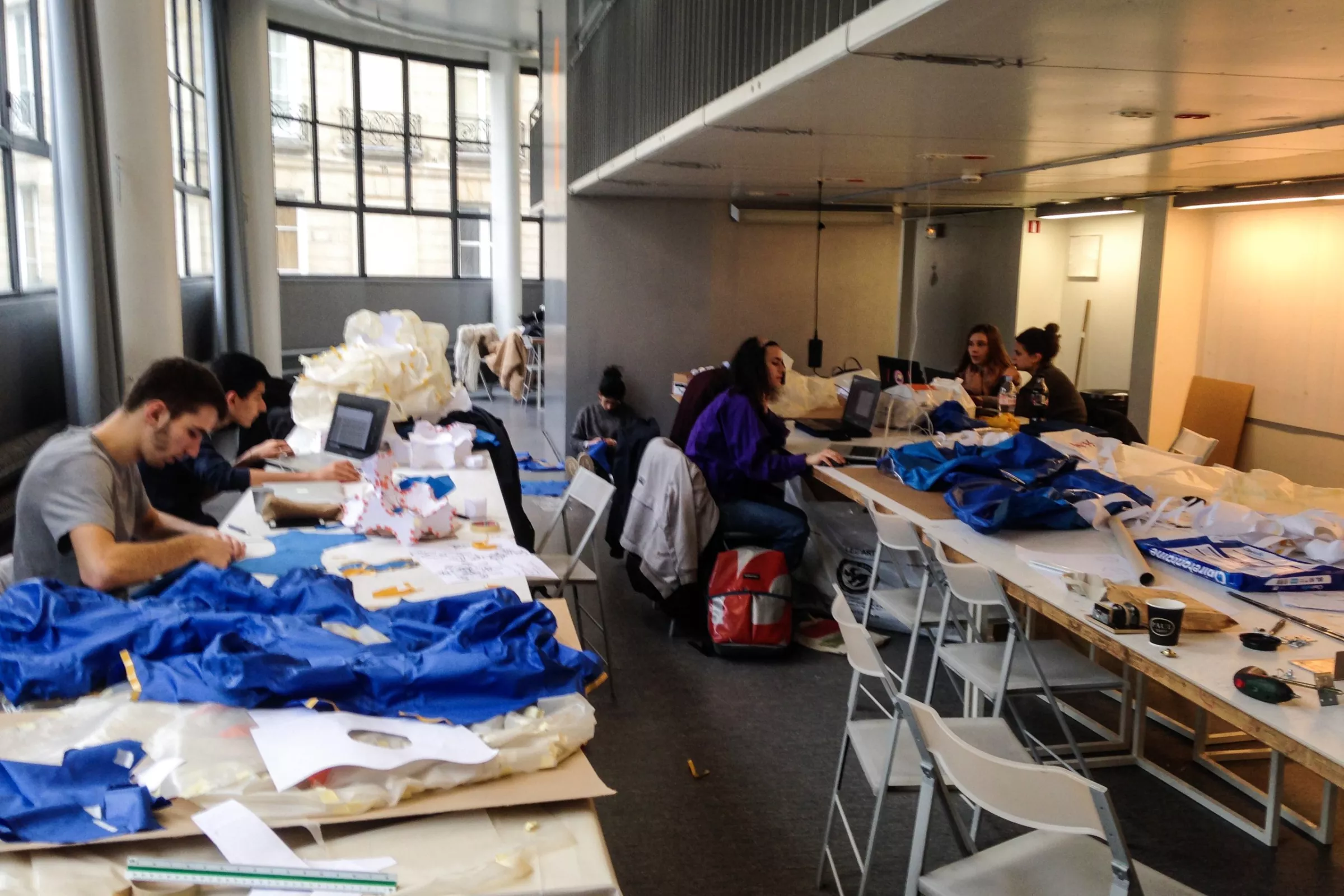
The end of the week was spent making the selected shapes at large scale: cutting the patterns, then sewing them in spinnaker cloth. Students followed the whole chain from idea to inflated object, as architect-makers. The workshop ended with a critical review in front of outside guests.